
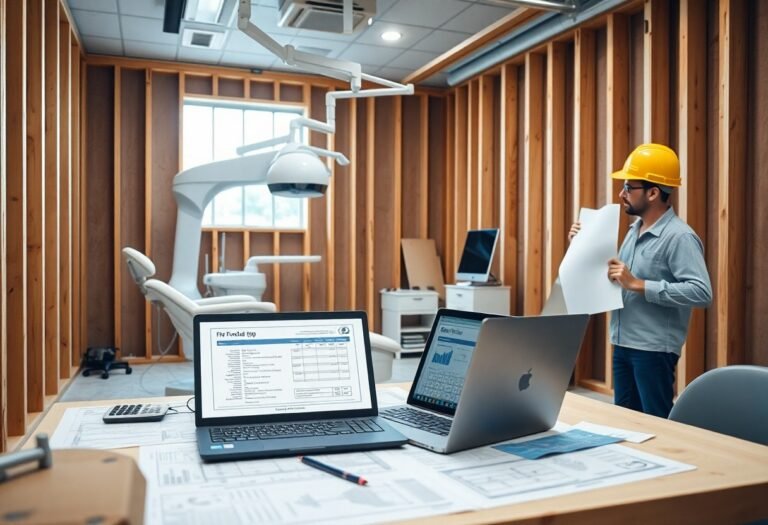
You should evaluate equipment loans, SBA loans, lines of credit, and vendor financing to match cost, timeline, and cash flow; compare rates, down payments, and tax implications to choose the most cost-effective option for your practice.
Key Takeaways:
- SBA 7(a) and CDC/504 loans offer long-term, lower-rate financing for buildouts and property purchases, with favorable amortization but longer approval times and collateral requirements.
- Equipment financing and leasing specifically suit imaging purchases, preserve working capital, can include maintenance, and usually have shorter terms and higher rates than real estate loans.
- Manufacturer or vendor financing often provides promotional rates and bundled service contracts for imaging systems, but may limit vendor choice and require specific credit terms.
- Practice lines of credit and business credit cards handle short-term cash flow needs during buildouts, cover unexpected expenses, and carry higher interest if balances persist.
- Combining loan types with tax strategies like Section 179 or bonus depreciation can lower upfront costs and improve cash flow; coordinate with your CPA and lender to structure the optimal mix.
Traditional Commercial Bank Loans
For established practices you can secure fixed-rate, amortizing loans for buildouts and equipment, often with lower interest than alternative financing. Expect strict underwriting, collateral requirements, and personal guarantees; strong credit and a solid business plan improve approval chances.
SBA 7(a) and 504 Loan Programs
Along SBA 7(a) offers flexible working capital and equipment financing up to 5 million, while 504 targets real estate and major fixed assets with long terms and low down payments. You benefit from government guarantees that lower lender risk, but application and documentation are more involved.
Conventional Business Loans for Established Practices
Against conventional loans you will find competitive rates for practices with proven revenue, shorter closing times than SBA, and flexible amortization. Lenders focus on cash flow, profitability, and collateral; strong financials reduce need for large personal guarantees.
Loans often require three years of tax returns, DSCR above 1.25, and a history of steady collections; you may secure financing for imaging equipment, practice expansion, or tenant improvements, typically with terms from three to seven years for equipment and up to 10 for real estate-backed facilities.

Specialized Dental Practice Lenders
It connects you with lenders focused on dental buildouts and imaging, offering expertise on equipment depreciation, realistic underwriting, and loan structures that suit your practice’s cash flow.
Benefits of Industry-Specific Financing
Between quicker approvals and lenders who understand dental revenue cycles, you receive tailored terms, higher approval odds for imaging purchases, and guidance on optimal loan sizing for your practice growth.
Flexible Repayment Terms for New Buildouts
Any repayment schedule can be structured around your projected patient growth, with options for interest-only starts, seasonal payments, or extended amortizations to ease early cash flow pressures.
For instance, you might start with a 12-24 month interest-only period then switch to principal payments, or use a ramped schedule tied to collections, keeping monthly obligations aligned with revenue as your practice matures.
Equipment Financing and Leasing for Imaging
After assessing your practice’s cash flow and growth plans, you can choose equipment loans or leases to preserve working capital while acquiring CBCT and digital imaging, balancing monthly payments, tax treatment, and upgrade options.
Financing High-Tech CBCT and Digital X-Ray Systems
To finance CBCT or digital X‑ray, you should compare vendor financing, bank equipment loans, and specialty medical lenders; prioritize term length, maintenance coverage, and warranty to keep clinical capabilities current without large upfront costs.
Capital Leases vs. Operating Leases for Technology
Technology assets under capital leases often transfer ownership and appear on your balance sheet; operating leases keep payments off-book and let you upgrade more easily, so you should choose based on tax goals and upgrade frequency.
Due to differing accounting rules, you must assess depreciation, interest deduction, and off-balance-sheet treatment; consult your CPA to model after-tax cash flow, residual value risk, and whether ownership suits your long-term technology refresh plan.
Practice Expansion and Real Estate Loans
To expand your practice, you can tap commercial real estate loans, SBA 7(a) or CDC/504, or practice lenders for buildouts and imaging; compare rates, loan terms, and prepayment penalties so you protect cash flow while growing.
Funding Multi-Operatory Construction Projects
Practice multi-operatory construction often requires construction loans, renovation lines, or equipment financing; you should get fixed-cost bids, staged draws, and contingency reserves to avoid overruns and minimize disruption to patient care.
Owner-Occupied Commercial Real Estate Options
Across owner-occupied options, you can buy property with SBA 504 loans, conventional mortgages, or seller financing; assess down payment, amortization, and tax benefits to match your growth and cash-flow goals.
In addition you should consult a CPA and commercial lender to compare depreciation schedules, interest deductibility, and potential 1031 exchange benefits so you choose financing that lowers taxes and preserves capital for equipment like CBCT and panoramic units.
Working Capital Lines of Credit
Not all lines of credit are equal; you should prioritize flexible business-purpose LOCs that cover payroll, materials, and short-term gaps during buildouts, with clear covenants and competitive rates.
Managing Cash Flow During Construction Phases
For cash flow during construction, you should draw only what you need, schedule draws to milestones, and maintain a reserve so your practice continues paying staff and suppliers without interruption.
Handling Unexpected Buildout Cost Overruns
Behind many cost overruns are scope changes and hidden site issues; you should secure contingency funding, insist on formal change orders, and track expenses daily.
It helps if you set contingency of 10-20% of build costs, define approval thresholds, require contractor insurance and performance bonds, and release draws only for approved work.
Key Requirements for Loan Approval
Once again you should gather clear financials, a strong credit history, detailed project plans, and experienced contractor bids to improve loan approval odds for buildouts and imaging purchases.
Credit Score and Practice Financial Analysis
The lender will review your personal and practice credit scores, cash flow, tax returns, and balance sheets to assess repayment capacity and risk; present clean, organized statements to strengthen your case.
Project Estimates and Contractor Documentation
Contractor bids, licenses, insurance, timelines, and scope documents show lenders you planned thoroughly; provide fixed-price estimates and contingency plans to reduce underwriting friction.
With detailed line-item budgets, equipment vendor quotes, contractor change-order protocols, permitting schedules, and proof of contractor experience, you will help lenders validate cost realism and disbursement schedules for draw-controlled loans.
To wrap up
You should weigh bank construction loans, SBA 7(a)/CDC 504 programs, equipment leases, and vendor financing, balancing interest rates, down payments, tax benefits, and repayment terms to fund buildouts and imaging; consult a finance specialist to match options to your practice’s cash flow and growth goals.
FAQ
Q: What funding options are available for dental practice buildouts and imaging equipment?
A: Common options include SBA 7(a) and CDC/504 loans, commercial bank term loans, equipment loans, equipment leases, vendor or manufacturer financing, business lines of credit, practice-owner equity, and private investors. SBA loans suit larger buildouts and real estate purchases with lower down payments but longer approval times. Equipment loans and leases provide faster approval and are secured by the equipment; loans create ownership while leases lower upfront cost. Vendor financing often bundles service and training, which can reduce setup risk. Lines of credit cover short-term cash flow and change orders during construction.
Q: How do equipment loans compare to leasing for imaging systems?
A: Equipment loans result in ownership, allow depreciation and potential Section 179 treatment, and usually yield a lower total cost over the life of the asset. Lease agreements require little or no down payment, preserve working capital, and often include service and upgrade options at lease end. Loan payments are typically higher but you retain asset value and resale options. Lease payments may be fully deductible as an operating expense depending on the structure and tax rules. Choosing between loan and lease depends on cash position, tax plan, and how often you expect to upgrade imaging technology.
Q: Can SBA loans be used for buildouts and imaging? What are typical requirements?
A: SBA 7(a) loans can fund buildouts, equipment, and working capital; CDC/504 loans finance long-term fixed assets such as real estate and major equipment. Lenders commonly require good personal and business credit, personal guarantees, a business plan, and financial projections; two years of operating history is preferred for many programs. Typical down payments range from about 10% to 20% for established practices and may be higher for start-ups. Approval timelines often run 45-90 days, and collateral requirements vary by lender and loan size.
Q: What financing terms should dentists expect and how can they secure the best rates?
A: Expect term lengths such as 3-7 years for equipment loans, up to 10 years for SBA 7(a) equipment or working capital, and up to 20-25 years for CDC/504 real estate loans. Interest rates depend on lender type, creditworthiness, and loan program; dental-specific lenders sometimes offer more competitive pricing for proven practices. Improve offers by presenting clean financial statements, strong personal credit, realistic pro forma revenue projections, higher down payments, and multiple lender quotes. Request rate locks, compare APRs including fees, and ask about prepayment penalties and included services.
Q: How should financing be planned for phased buildouts and future imaging upgrades?
A: Create a staged budget that separates core buildout costs from elective upgrades and includes a 10-20% contingency line item. Use a construction loan or term loan for initial buildout and consider short-term lines of credit or equipment leases for later imaging purchases to preserve flexibility. Build predictable payment schedules into your pro forma to match expected revenue ramp-up. Negotiate trade-in or upgrade clauses with vendors, set aside a renewal or replacement reserve, and coordinate financing and tax strategy with your CPA to optimize depreciation and cash flow.